AI Recommendation Builder That Had to Keep Up With Its Own Rule Book - 3 Case Studies
Quick answer
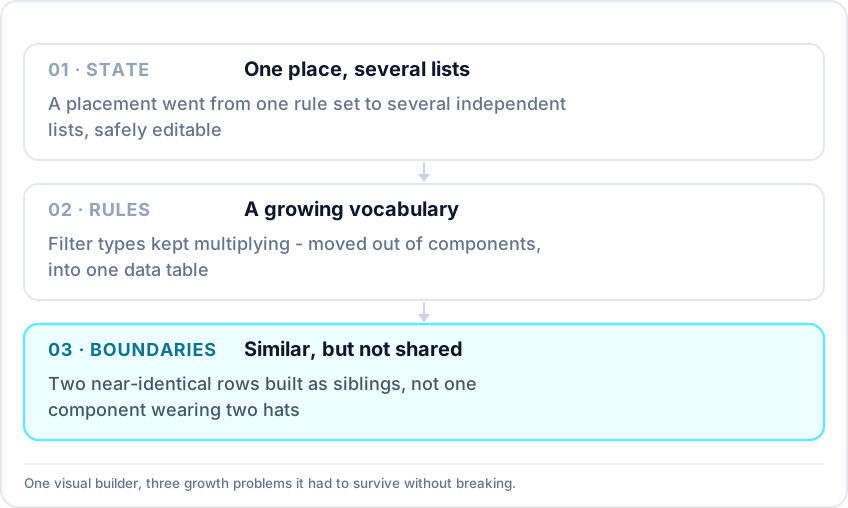
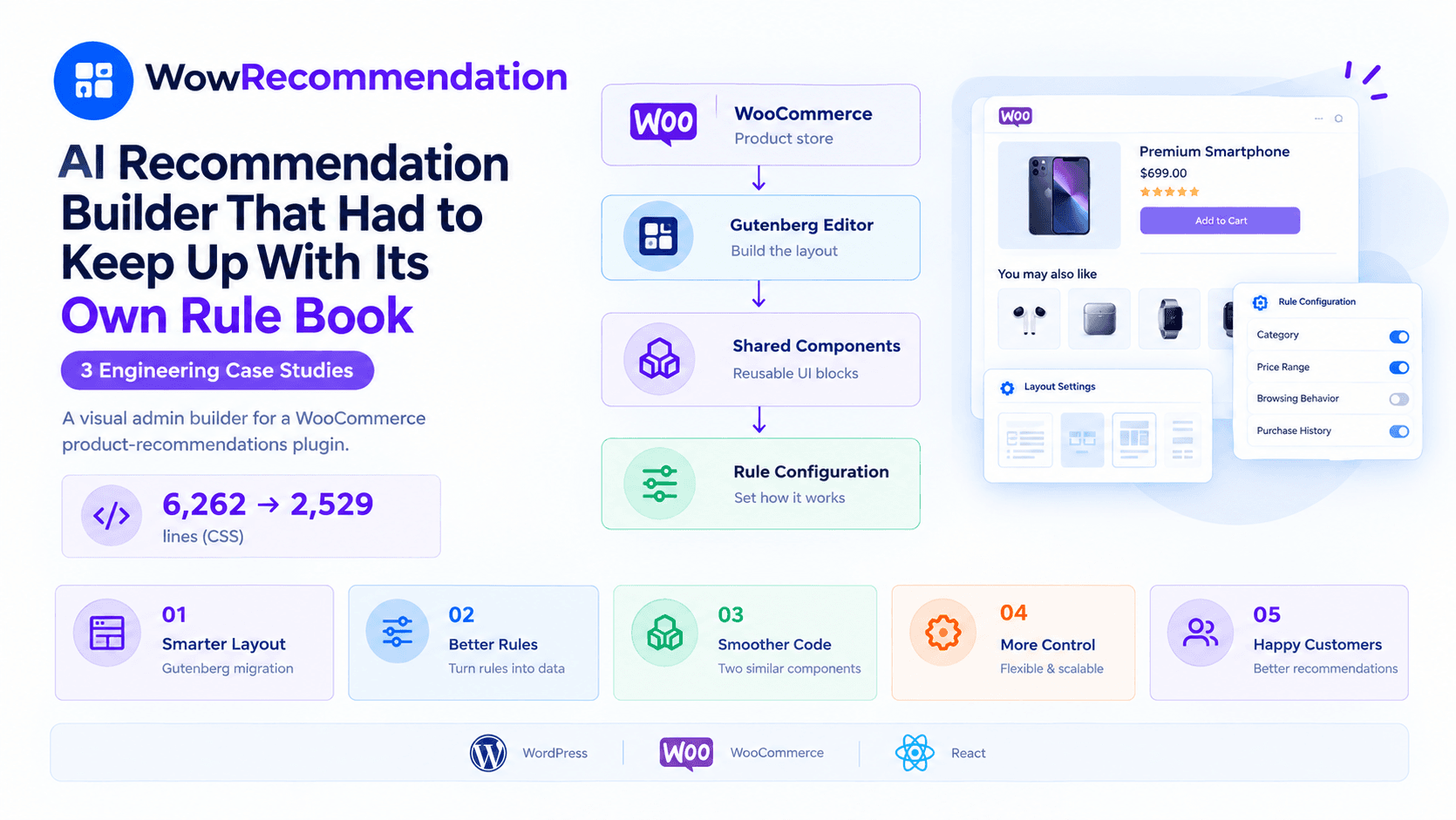
I built the admin builder for a WooCommerce recommendation plugin: a screen that shows a merchant their own storefront - product page, cart, checkout, shop - with editable markers at every point a recommendation block can appear.Three things had to be gotten right underneath that screen while it was being built: how many independent recommendation lists a single placement could hold, how many distinct rule types a merchant could filter by, and where two near-identical builder components should and shouldn't share code. Each problem needed its own answer, and all three are documented here.
The initiative
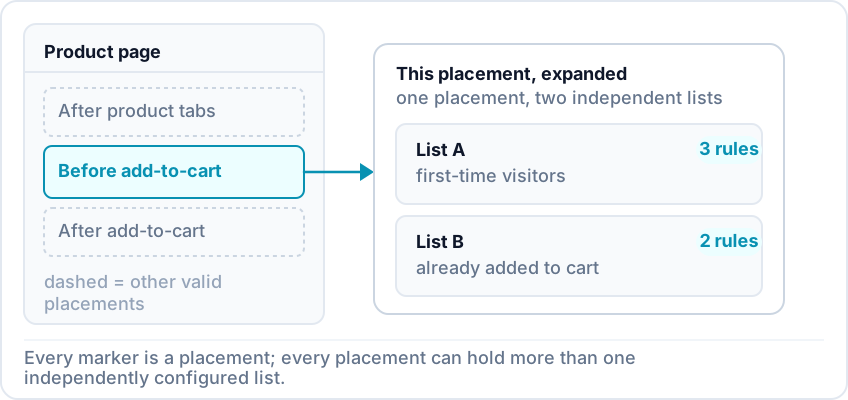
The plugin recommends products on a merchant's storefront based on rules - category match, price range, browsing behavior, purchase history, and more.The admin builder is where a merchant sets that up: pick a placement on their site, define one or more recommendation lists for it, and configure the rules and sort order for each.I built this screen and its underlying data model over about five weeks. It kept changing shape as requirements did - a placement went from holding one rule set to holding several independent ones, and the rule vocabulary kept growing past what the UI's early plumbing was built to handle.I moved to other work after that, and a teammate continued iterating on the builder from where I left it.
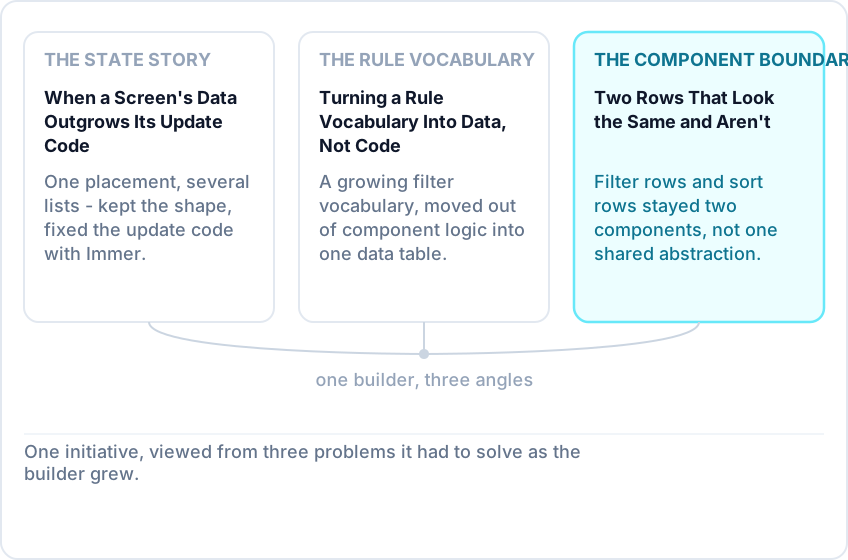
The state-management case study. What happens to a nested state model when a screen's data goes from "one rule set per placement" to "several independently editable lists per placement," and why I fixed how updates were written instead of reshaping the data.
The rule-vocabulary case study. The plugin's filter types kept growing - category, price, browsing behavior, purchase history, each with its own valid operators and timeframes. Here's how I moved that vocabulary out of component logic and into a single data table the UI reads from.
The component-boundary case study. Filter rows and sort rows looked like the same component wearing two hats - here's why we built them as siblings instead of one shared abstraction, and how I kept them from drifting apart as the codebase moved.
FAQ
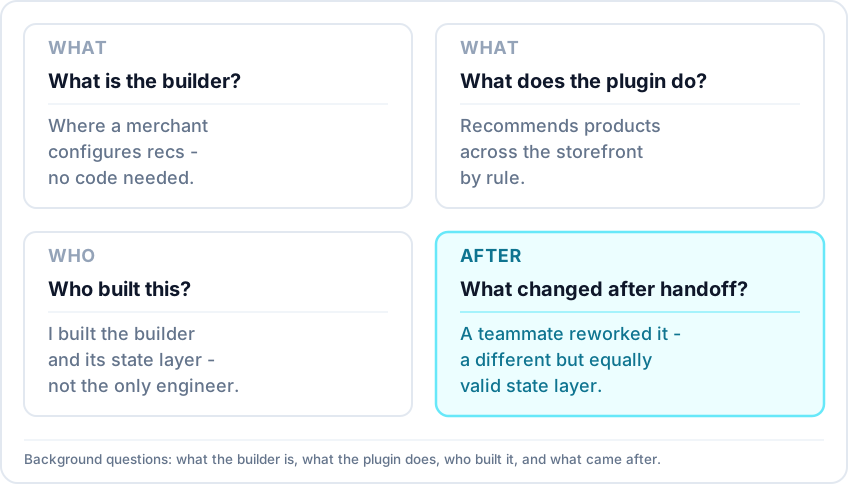
What is a recommendation builder?
It's the admin screen where a merchant configures product-recommendation logic for their storefront - which products to show, where to show them, and under what conditions - without writing any code.What does the plugin do?
It's a WooCommerce plugin that recommends products across a store's product pages, cart, checkout, and shop pages, using rules based on category, price, browsing behavior, and purchase history.Who built this?
I built the builder screen and its state and rule-configuration layer over about five weeks. I wasn't the only engineer on the plugin - the backend rule engine was owned separately - and a teammate continued developing the builder after I moved to other work.What changed after you moved on?
The screen I built was later reworked by a teammate, including a different approach to the state layer than the one I'd used. Both approaches solve the same underlying problem from different angles - see the state-management case study for that comparison.
On this page
Quick answer
The initiative
The case studies
When a Screen's Data Outgrows Its Own Update Code →
Turning a Growing Rule Vocabulary Into Data Instead of Code →